












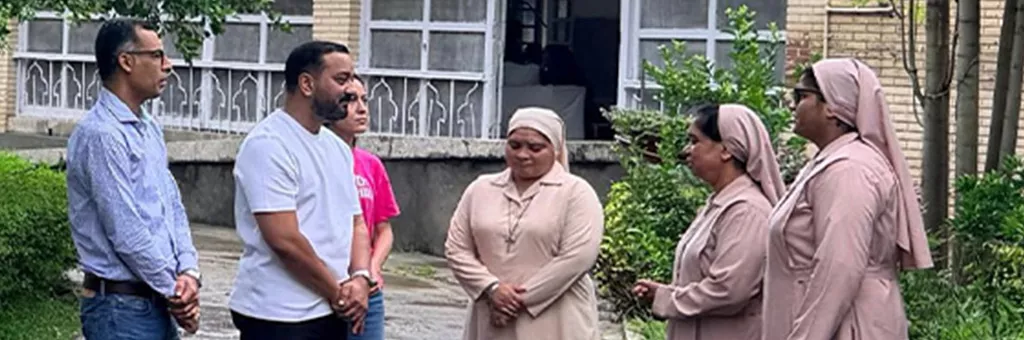
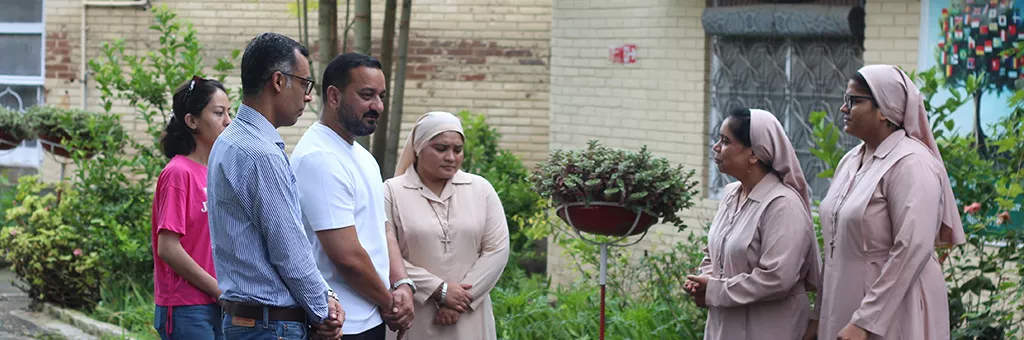
We at Supertouch are proud to announce that our director, Khurram Akhtar, has been honoured with the opportunity to join the Board of Trustees at the Balqees Welfare Foundation. A charity close to his and his family's hearts, supporting medical, education and food provisions across Pakistan.
Growing up and studying in Pakistan, Khurram Akhtar saw poverty up close. Since a young boy, he recalls his family knowing their sense of duty to help those who are in need the most. It is why Supertouch donates 50% of net profits to the Balqees Welfare Foundation (BWF), and when the BWF asked him to join its Board of Trustees, he said yes without hesitation.
The appointment was marked with a visit to Pakistan, where the BWF team hosted colleagues from Supertouch UK for lunch in Islamabad, a chance, as BWF described it, to strengthen a partnership already built on shared purpose.
A Relationship That Already Runs Deep
Supertouch already donates 50% of its annual net profits from every product range to BWF, alongside a further 5% of revenue from its own factory. It is a substantial commitment, one that supports food assistance, education, healthcare and hardship relief for communities in and around Rawalpindi, Islamabad and Karachi.
To understand why that support matters, it helps to look at the scale of the challenge. Pakistan's national poverty rate climbed to 25.3% in 2024/25, up from 21.9% just a few years earlier, according to the World Bank. On a broader measure of poverty, over four in ten people in Pakistan live on less than $4.20 a day. An estimated 25 million children are out of school, the second-highest number anywhere in the world, according to UNICEF and Pakistan's own Economic Survey. Furthermore, tuberculosis, a disease closely linked to poverty and poor nutrition, affects around 670,000 people in Pakistan every year, with the country ranking fifth globally for TB burden according to the World Health Organisation.
BWF's work sits directly inside those statistics, doing its bit to turn the tide. In FY 2025/2026, the Foundation supported 15,200 beneficiaries, spanning healthcare, education, skills development, food distribution and hardship support. This includes monthly food parcels for hundreds of families, ongoing support for tuberculosis patients and hospice residents, vocational training and equipment, and wheelchair distribution for people with disabilities.
The scale of Supertouch's financial philanthropic commitment, along with new levels of involvement, hopes to help many more people across the regions it serves. Khurram is no longer a supporter watching from the outside. He is now one of the people holding that spending to account. A role he is incredibly proud to be taking on.
The Added Benefit of Khurram's Commercial Thinking
A charity board's job is straightforward in theory: provide a check and balance, and bring a diversity of thought that no single person, however well intentioned, can offer alone. BWF's board includes doctors, businessmen and civil servants, each applying their own expertise to how money is spent and its effectiveness.
Khurram's contribution comes from a commercial background, and he is clear that this means applying the same rigour to charitable spending as to any other investment decision.
His UK vantage point further adds something else. Sitting on a board alongside people working day-to-day in Pakistan, he's able to bring an outside perspective, drawing on policy models and approaches he's seen work in the UK, and asking whether something similar could translate locally.
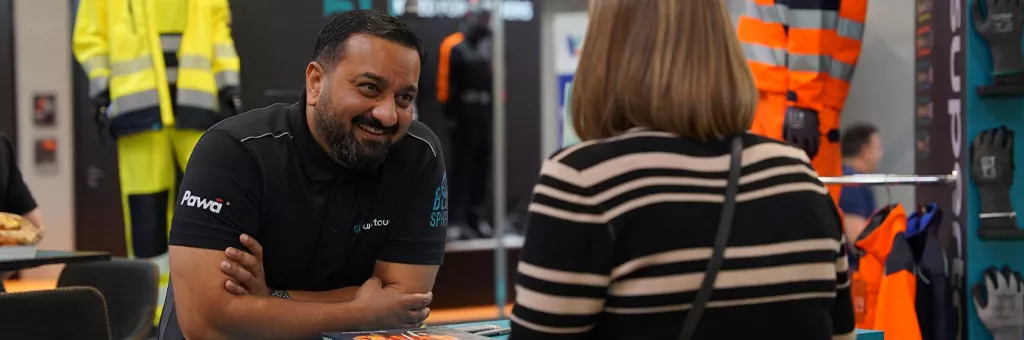
For Humanity, Regardless of Background
One thing Khurram is keen to stress is who BWF supports and the secular for humanity approach.
What It Means for Supertouch
Earlier this year, Supertouch introduced a new brand platform: Protective Workwear with a Conscience. Any company can claim a set of values. Demonstrating them takes more. Khurram's appointment is one tangible way Supertouch is trying to do that, not by adding a new commitment, but by deepening one that already exists, with someone from inside the business now personally accountable for how charitable donations are spent.